
India and the US had on July 17 signed a preliminary agreement for cooperating on emergency crude oil reserves, including the possibility of India storing oil in the US emergency stockpile.
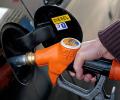
Stocks of Hindustan Petroleum Corporation Limited (HPCL), Bharat Petroleum Corporation Limited (BPCL) and Indian Oil Corporation Limited (IOCL) have more headroom left despite the sharp run in the last few weeks, suggests a recent report from Morgan Stanley. Stocks of these oil refining and marketing companies (OMCs), it believes, are seeing multiples re-rate as investors reassess long-term growth prospects. "IOCL trades at one year forward P/BV of 1.2x, 19 per cent below +1 standard deviation (SD); BPCL trades at one year forward P/BV of 1.5x, near historical averages; HPCL trades at one year forward P/BV of 1.5x, near +1SD," Morgan Stanley said.

Following a global strategy to promote healthy beverages, Coca-Cola India is considering an entry into various new beverage segments such as juices in addition to sports and energy drinks.

India will become the third-biggest economy in the world by 2030, Deputy Chairman of the Planning Commission Montek Singh Ahluwalia said.

In a remarkable display of resilience and commitment to democracy, the residents of villages that had long been deprived of polling due to terrorist threats and separatist-sponsored boycott calls turned out in large numbers to cast ballots in the sixth phase of Lok Sabha polls on Saturday.

Tata Group on Wednesday announced an investment of 4 billion pounds (about Rs 42,500 crore) in setting up a flagship factory to make batteries for Jaguar Land Rover as well as other manufacturers. Tata Sons, owner of JLR, chose Bridgwater in Somerset in southwest England for the gigafactory over a rival location in Spain. The gigafactory, at 40GWh, will be one of the largest in Europe and Tata's first outside of India, the conglomerate said in a statement.
The new four-wheeler (4W) electric vehicle (EV) policy may spur the entry of global majors. The manufacturing policy cuts Customs duty to 15 per cent, given a minimum investment commitment. It calls for a minimum investment of Rs 4,150 crore (about $500 million) for making electric four wheelers (e-4Ws), with manufacturing to commence within three years of approval.

India on Monday joined a US-led initiative to set up an Indo-Pacific Economic Framework to bind partner countries to achieve common goals, with Prime Minister Narendra Modi asserting that New Delhi will work with the stakeholders to make it an "inclusive and flexible" structure to pave the way for development, peace and prosperity in the region.

The PM urged all citizens to light diyas in their houses on January 22 so that the whole country basks in glory.

Tata Power will target 10,000 micro grids across India, for which it has formed a company, TP Renewable Microgrid.

About 53 million homes in the country are yet to get electricity and many industries depend on diesel generation sets to meet their requirements.

The Tata group is planning to invest $90 billion in new industries such as mobile components plant, semiconductor, electric vehicles, batteries, renewables energy and e-commerce by 2027. The Tata group's investment in India is far higher than the $75-billion investments planned by Mukesh Ambani-owned Reliance Industries and $55-billion investment planned by the Adani group in the next five years in the country, the Economist reported recently. The investment by the Tata group is a shift in its strategy to focus more in the home markets instead of international markets where the group lost money.

As India builds its data centre capabilities, it is imperative that it is supported by green energy. This is because data centres are guzzlers of energy.

Prime Minister Narendra Modi on Thursday left for the Uzbek city of Samarkand to attend the Shanghai Cooperation Organisation (SCO) summit that will also see the participation of Russian President Vladimir Putin, Chinese President Xi Jinping and Iran's Ebrahim Raisi among other top world leaders.

The global body added that national meteorological and hydrological departments in both countries are working closely with health and disaster management agencies to roll out heat health action plans.


Finance Minister Nirmala Sitharaman on Thursday announced a Rs 11.11 lakh crore spending on infrastructure and vowed to continue reforms as she resisted resorting to populist measures in Modi government's last Budget before general elections, instead choosing to stay on the path of cutting deficit while bolstering measures for focus groups.

A drug developed by the Defence Research and Development Organisation (DRDO) may reverse the heart damage caused by a protein in the SARS-CoV-2 virus, a study conducted in fruit flies and mice has found.

As the world celebrated International Day of Persons with Disabilities (PwD) on December 3, corporate India has kept up with efforts to make workplaces more inclusive and accessible. Organisations across sectors are taking initiatives such as equipping offices with practical work tools like Braille-friendly and voice-enabled lifts and screen readers. While inclusion has gained pace, only 11.3 per cent (or 3.4 million out of 30 million) Indians with disabilities have jobs.

Apple's newest phone iPhone 14 will be made in India as the global tech titan bets big on the manufacturing prowess of the world's second-biggest smartphone market after China.
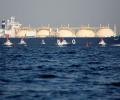
Oil and LNG prices are likely to shoot up if Iran is to block Strait of Hormuz, through which countries like India import crude oil from Saudi Arabia, Iraq and UAE, leading to a spike in inflation, analysts said on the Iran-Israel conflict. The Iran and Israel conflict has escalated over the last few days. Iran first launched drone and rocket attacks on Israel, which retaliated by firing a missile. Crude oil prices have hovered around USD 90 per barrel since the conflict.

Govt hopes to add 0.21 mn Mw capacity by 2022, against 0.25 mn Mw added over 60 years.

The pressure on India to take a hostile attitude towards Russia and China was not subtle, but it was guarded, observes Ambassador T P Sreenivasan after Monday's 2+2 ministerial meeting in Washington, DC.

India, the world's third-biggest oil consumer, has conveyed to OPEC countries its concern over high oil prices that are threatening to impact the nascent economic recovery after the devastating pandemic. New Oil Minister Hardeep Singh Puri has made phone calls to key OPEC nations to convey the desire for an affordable price for consumers. After calling his counterparts in Qatar and the UAE, he called Organization of the Petroleum Exporting Countries (OPEC) kingpin Saudi Arabia on Thursday evening.
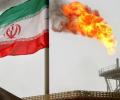
Iran has offered to help India meet its energy needs by relaunching rupee-rial trade for export of oil and gas, said Iranian ambassador to India Ali Chegeni. Chegeni said if both the countries resume rupee-rial trade, bilateral trade can touch $30 billion. Iran used to be India's second largest oil supplier but New Delhi had to halt imports after the former US president Donald Trump withdrew from the nuclear deal with Iran and re-imposed sanctions on its oil exports.
The share of nuclear power in India's energy basket could go up from 3 per cent to 6-10 per cent over the next 25 years, according to industry experts.

After securing a euro 150 million Credit line for solar energy finance from a German financial institution, State Bank of India is in talks with european Investment Bank for about euro 200 million to fund climate finance. Recently the country's largest lender obtained euro 150 million in green funding from German government-owned KFW on soft terms and a long repayment period. SBI will use funds to finance solar energy projects.

Indian imports of Russian crude oil may stabilise or even decline in 2024 from record 2023 levels amid shrinking discounts, lower output, and a rebound in West Asian supplies, according to the ship-tracking data and industry executives. This may impact the billions of dollars in annual savings that India made last year. Imports of Russian oil jumped by a record 140 per cent in calendar 2023 to 1.79 million barrels a day (b/d) from 740,400 b/d in 2022, when Russia marched into Ukraine in February, and from just 102,000 b/d in 2021, according to the data from Paris-based market intelligence agency Kpler.

A higher-than-expected consumer price inflation (CPI) print for March in the US has dashed hopes of an interest rate cut by the US Federal Reserve (US Fed) in June. Analysts now expect the US central bank to start cutting rates in September, provided inflation remains in check and oil prices remain supportive. The markets, analysts believe, partially factored in this possibility.
